Product Description
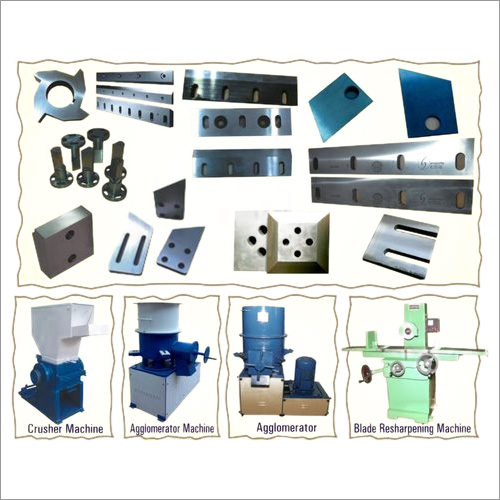
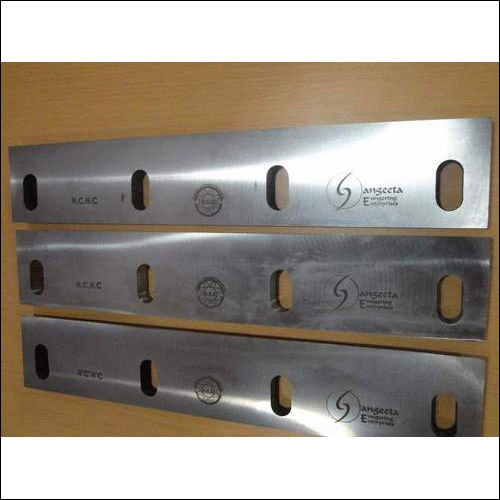
We are among the major manufacturers and exporters of Industrial Cutting Blades. Our dexterous team of professional makes use of quality assured materials and pioneering techniques. The provided blades are highly demanded by masons in the construction of buildings. Also, our quality experts check these blades on various parameters of quality. Available at industry leading prices, our Industrial Cutting Blades can be availed from us in variegated sizes and finish.
Features:
- Compact design
- Light weight
- Rigid construction
Engineered for Tough Cutting TasksDesigned for heavy-duty industrial use, these cutting blades handle metal, paper, plastic, and textile materials with ease. Their high-speed steel construction and fully hardened treatment enable precision cutting while maintaining long-term durability, making them the ideal choice for diverse manufacturing environments.
Precision and Reliability GuaranteedWith a tolerance of 0.02 mm, our blades deliver consistent and precise cuts, increasing productivity and reducing waste. The circular shape and optimized edge ensure seamless compatibility with rotary cutting machines, supporting both manual and automated operations for high-volume production.
Broad Application SpectrumAdaptable to varying industry needs, the blades are suitable for exporters, manufacturers, service providers, and suppliers. Their rust-resistant surface finish, high hardness, and robust design translate to long-lasting performance in demanding operational settings, cementing their status as a reliable industrial asset.
FAQs of Industrial Cutting Blades:
Q: How do I determine the correct teeth per inch specification for my cutting application?
A: Teeth per inch (TPI) varies by blade specification and material type. For precise recommendations, consider the material you wish to cutmetal, paper, plastic, or textilethen consult our technical team to select the optimal TPI for your required cut quality and speed.
Q: What is the process for maintaining the blades to ensure optimal performance?
A: To maintain performance, regularly check for wear, clean the blade after use, and store it in its box-packed container. Prevent rust by keeping the polished, uncoated blades dry and performing periodic inspections, especially under heavy use in industrial settings.
Q: When should I use a serrated edge versus a plain edge blade?
A: Serrated edge blades are best for tougher or fibrous materials like textiles and thick plastics, as they offer better grip and slicing action. Plain edge blades are suitable for clean, straight cuts in metals and paper where minimal material fraying is desired.
Q: Where can these industrial cutting blades be installed and operated?
A: These blades are compatible with most rotary cutting machines used in manufacturing and processing plants. They suit both manual and automatic operation methods, offering flexibility for installation in factories and workshops throughout India.
Q: What benefits do fully hardened and tempered blades have compared to standard blades?
A: Fully hardened and tempered blades possess superior hardness (58-60 HRC), increased wear resistance, and extended service life. This heat treatment enables the blades to withstand high cutting speeds and frequent continuous operations without degrading performance.
Q: How does the blades precision tolerance enhance cutting quality?
A: A tolerance of 0.02 mm ensures tight dimensional controls, resulting in precise cuts, reduced material waste, and consistent production quality. This level of accuracy is vital in high-demand manufacturing environments where reliability is paramount.
Q: What is the advantage of using high-speed steel (HSS) for blade material?
A: High-speed steel offers excellent strength, toughness, and resistance to abrasion, which allows the blades to handle high cutting speeds and diverse material types. The result is a versatile, long-lasting blade suitable for rigorous industrial cutting processes.







 Send Inquiry

 Send Inquiry
 Send SMS
 English
 Spanish
 French
 German
 Italian
 Chinese (Simplified)
 Japanese
 Korean
 Arabic
 Portuguese